History of the Church
See how the Church carried the faith through centuries of witness, sacrifice, and continuity.
Quick view
Progress
Lesson 3 of 22
The Issue Between Monophysitism and Dyophysitism
The Ethiopian Orthodox Church considers itself to belong to the One, Holy, Universal and Apostolic Church founded by Jesus Christ. It is holy because its founder, Jesus Christ, is holy; it is catholic because the whole world is its province and because it is universal in time and place; it is apostolic because it was established on earth by the apostles of Christ.
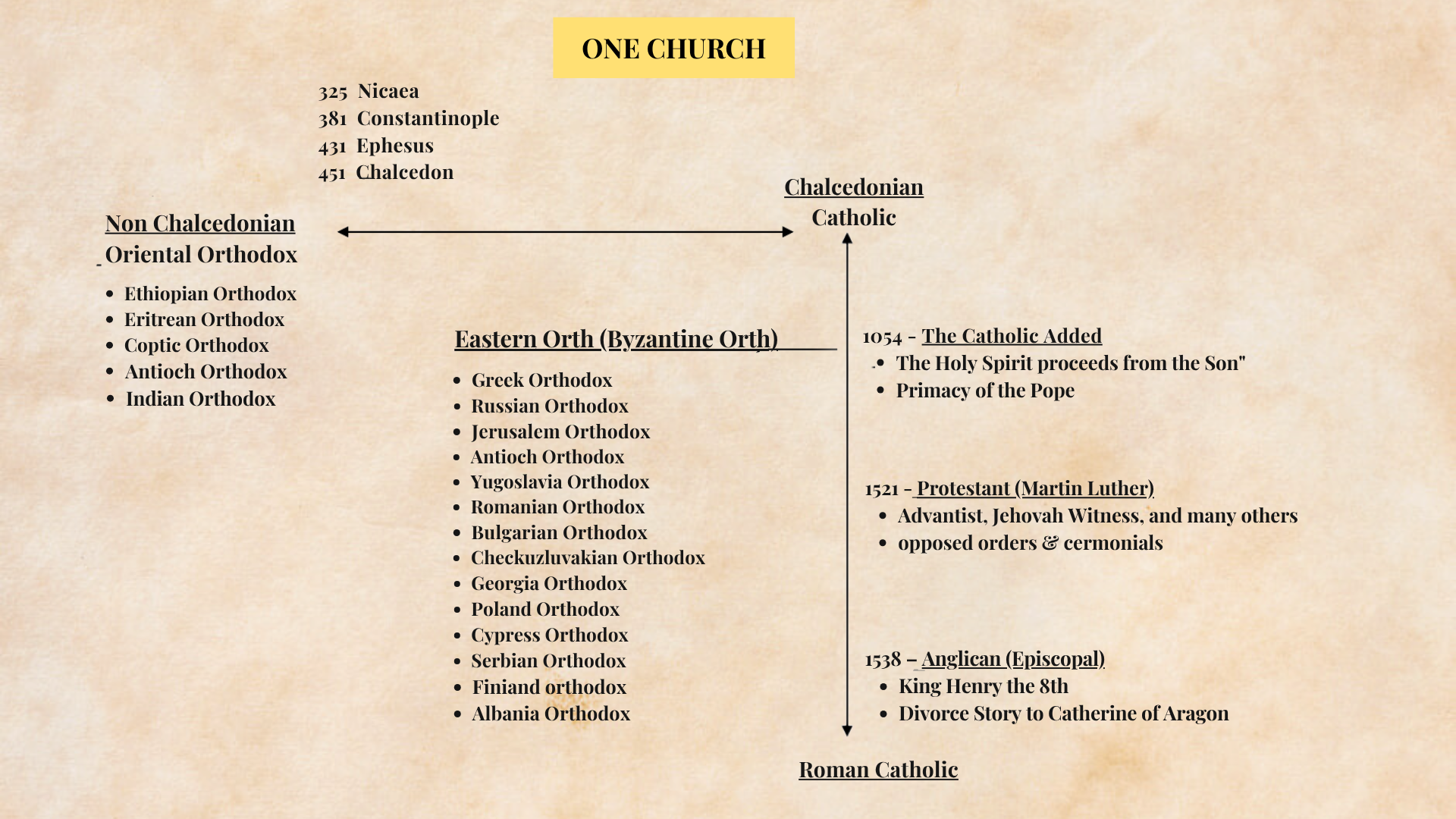
The Ethiopian Church belongs to the group of Orthodox Churches wrongly termed "Monophysites" but which prefer the epithet "Non-Chalcedonian". The other members of this family are the Coptic, Armenian, Syrian and Indian Churches. Together with the Roman Catholic Church and the Byzantine Orthodox Church they comprised the One Church for four centuries until the division arose on account of the Council of Chalcedon in 451 which insisted that Christ had the two natures of humanity and divinity.
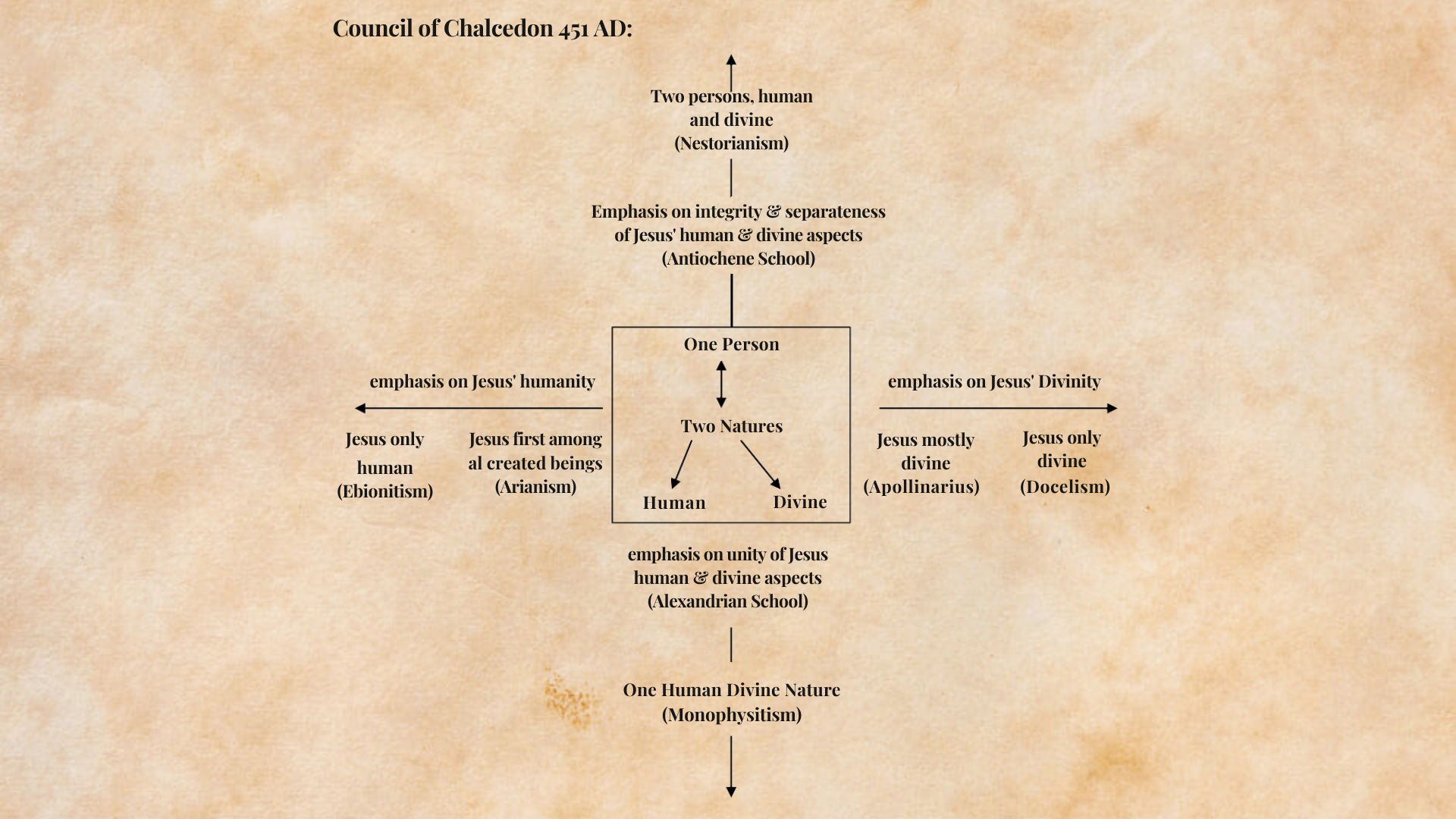
Dyophysites teach that, after the union, Christ retained the natures of divinity and humanity in His one Person in such a way that He ate food, slept, laughed, suffered, walked as man in the human nature, but healed the sick and resuscitated Lazarus as God in the divine nature. Thus He is one Person in two natures of humanity and divinity. The wrongly called Monophysites reject the allegation that they teach one Nature and one Person in Christ. The teaching of the Ethiopian Church may thus be summarized:
1. The Ethiopian Church rejects Eutyches, who is believed to have taught that in Christ the human Nature was absorbed by the divine Nature. Nestorius also is excluded.
2. Dioscorus, whom the Council of Chalcedon deposed, is accepted. But it should be remembered that the Council of 451 did not believe that Dioscorus was a heretic. Dioscorus did not deny the continuance of Godhead and manhood in the One Christ after their union and he agreed with the Council that the teaching which Eutyches was understood to hold was heretical.
3. The teaching of the Ethiopian Church is the faith of the Fathers expounded by the great theologians of the Alexandrine tradition, especially by St. Cyril and his illustrious theological followers. Accordingly the Ethiopian Church maintains that Christ is perfect God and perfect man, at once consubstantial with the Father and with us; the divinity and the humanity continuing in Him without mixture or separation, confusion or change. He is one and the same person both in his eternal pre-existence and also in the economy, in which he performs the redeeming work of God on behalf of man, from the indivisible state of union of Godhead and manhood.
4. The Church abides by the formula "The one Incarnate Nature of God the Word", on which St. Cyril of Alexandria increasingly insisted, a formula which was accepted as correct by the Council of Ephesus in 431 A.D and which, after the Council of Chalcedon, the Chalcedonian side in the East itself admitted.
5. It is unfair for the Church to be nicknamed "Monophysites" by the faithful who accept the Chalcedonian formula of "two Natures in the one Person of Jesus Christ", because the expression used by the non-Chalcedonian side was always miaphysis, and never Monophysis (mia standing for a composite unity unlike mone standing for an elemental unity). Therefore these churches are best referred to as the non-Chalcedonian Orthodox Churches.
6. "Tewahido" is the Ethiopian term (meaning "made one") which is the best expression conveying the faith of the Church, since it emphasizes the inseparable unity of the Godhead and manhood in the Person of Christ. The Church's official title is "The Ethiopian Orthodox Tewahido Bete Christian."
7. After the Union, Christ was no longer in two natures. The two natures became united into one nature without separation, without confusion and without change. Thus He was at the same tithe perfect God and perfect man. This is the union of the natures in the Incarnation. After the union Christ is not two persons or two natures. but one Person, one incarnate Nature of God the Son, with one will, but being at once divine and human. If you separate the natures after the union and say that Christ is in two natures, you will be confronted with serious problems. You will have to admit, for instance, that Christ was crucified merely as a man and that therefore he did not redeem the world, for God alone is able to accomplish the world's redemption. In brief, it is held that Christ, in acting, acted as a united being, not separately as man or separately as God.
8. Proof that we believe in the continuance of divinity and humanity in the One Christ may be illustrated:
a) In the Communion we receive the very body and blood of Jesus Christ. These belong to man, humanity, and we know that Jesus Christ is God, divinity.
b) The present Liturgy can be used as a criterion of the Church. There it is openly expressed that there is divinity and humanity in Christ.
c) The Chalcedonian formula was rejected because it was thought to destroy the one person of Christ and there was no clear distinction between "nature" and "person", person meant nature.
d) We believe the Nicean Creed in which the divinity and humanity of Christ are set forth, and in the Creed of the liturgy we declare our belief in the co-equality of Jesus Christ with God the Father, and belief in his having grown like men, yet without sin or evil, and in his having taken flesh from Mary.
e) The confession of Faith by the Emperor Claudius declares that Jesus Christ was perfect man and perfect God.
Monophysitism is rejected. It is a question of error in vocabulary, the concepts of Nature and Person not being clear and there being obscurity in philosophical terms such as physis, hypostasis, ausia, prosopon, atreptos, mia, mono etc. As to the two natures of Christ the Dyophysites and non-Chalcedonians are one, it is a matter of interpretation after the union of the two natures. Happily the Dyophysites are currently realizing the position.
Fundamental Dogmas in the Nicene Creed
The following is the Creed said in the Mass, called "Amakniyo of the Apostles", the one which the Apostles gave in Jerusalem: -
"We believe in one God, Maker of all creation, Father of our Lord and our God and our Saviour Jesus Christ, because his nature is unsearchable.
As we have before declared (i.e. in Didascalia), he is without beginning and without end, but he is ever living, and he has light which is never extinguished, and he can never be approached.
He is not two or three, and no addition can be made to him; but he is only one, living for ever, because he is not hidden that he cannot be known, but we know him perfectly through the law and the prophets, that he is almighty and has authority over all the creation.
One God, Father of our Lord and our Saviour Jesus Christ, who was begotten before the creation of the world, the only begotten Son coequal with him, creator of all the hosts, the principalities and the dominions:
Who in the last days was pleased to become man, and took flesh from our Lady Mary, the holy Virgin, without the seed of man, and grew like men yet without sin or evil; neither was guile found in his mouth.
Then he suffered, died in the flesh, rose from the dead on the third day, ascended unto heaven to the Father who sent him, sat down at the right hand of Power, sent to us the Paraclete, the Holy Spirit, who proceeds from the Father, and saved all the world, and who is co-eternal with the Father and the Son.
We say further that all the creatures of God are good and there is nothing to be repented of, and the spirit, the life of the body, is pure and Holy in all.
And we say that marriage is pure and childbirth is undefiled because God created Adam and Eve to multiply. We under stand further that there is in our body a soul which is immortal and does not perish with the body.
We repudiate all the works of heretics and all schisms and transgression of the law, because they are for us impure.
We also believe in the resurrection of the dead, the righteous and sinners; and in the Day of Judgment, when every one will be recompensed according to his deeds.
We also believe that Christ is not in the least degree inferior because of his incarnation, but he is God the Word who truly became man, and reconciled mankind to God being the High Priest of the Father.
Henceforth let us not be circumcised like the Jews. We know that he who had to fulfil the law and the prophets has already come.
To him, for whose coming all people looked forward, Jesus Christ, who is descended from Judah, from the root of Jesse, whose government is upon his shoulder: to him be the glory, thanksgiving, greatness, blessing, praise, song, both now and ever and world without end, Amen."
Relations with Orthodox Chalcedonian Churches
Even though the Ethiopian Orthodox Church in some respects differs from the Orthodox Chalcedonies Churches and has no canonical communion with them, it has always maintained a sense of unity with them; the origin after all is the same, Emperor Constantine wrote a letter in 356 A.D in which he addressed the king of Ethiopia Ezana and his brother “my precious brothers”. The Roman Emperor Justin asked Caleb to help the oppressed Christians in the Yemen in the sixth century. During the last quarter of the nineteenth century the Chalcedonies Orthodox Church made efforts for the progress of the Ethiopian monks. Emperor Yohannes invited the Russian Church to send missionaries to the country.
Representatives of the Greek, Russian, Rumanian and Yugoslavian Churches have repeatedly visited the Church. Recently the Russian Orthodox Church assisted the St. Paul’s school for church students by offering equipment of a Physics Laboratory. Scholarships have been made available for ecclesiastical studies in these churches. Publications are regularly exchanged. In turn the Ethiopian Church sends missions and delegations to these Churches and takes an active part in the conferences organized for the benefit common to Orthodoxy. In her relations with the Chalcedonies Orthodox Churches the Ethiopian Church will continue to proceed from the desire to “keep unity of the Spirit in the bond of peace”. (Eph. 4: 3).
Ethiopian Students are sent to Greece, Russia and Rumania for higher ecclesiastical studies and visits are regularly received and sent.
Dialogue Between Orthodox Chalcedonian and Non-Chalcedonian Churches
Up to the fifth century Christianity was one. The Nestorians were condemned at the Council of Ephesus in 431 A.D giving rise to the Nestorian Church Following the Council of Chalcedony in 451 A.D which condemned the so-called Monophysitcs, there arose a division which caused the separation between the Copts, the Ethiopians, the Syrians and the Armenians on the one hand and the Byzantine and Latin body of Churches on the other. In the eleventh century came the Great Schism between the Latinos and the Byzantine when the Byzantine Patriarchies in the East formed what is now known as the Eastern Orthodox Church.
The Ethiopian Church has never tended in fuse with one or other of the two great churches of Christianity, the Orthodox and the Catholic. There was a time when fusion with the Catholics nearly materialized in the 17th century as the extraordinary Father Paez, a Spanish Jesuit, succeeded in converting Emperor Susenyos to Roman Catholicism. He tried to force his subjects adopt Catholicism but failed. The Orthodox Church made efforts in the 19th century and did not get better results. Many times it was believed that union was to be achieved. Emperor Menelik, however, was of the opinion that if his Church attached itself to Constantinople or Moscow, it would lose its independence and original characteristics; he refused to sign any formal agreement.
The Pan-Orthodox meeting at Rhodes in 1961 considered relationships with the Oriental Orthodox Churches (Armenian, Coptic, Syrian, Ethiopian and Indian) to be one of most urgent matters in the realm of ecumenical relationships. The same had been felt by those Orthodox from both sides who participated in various meetings of the economical movement in the last two decades.
Accordingly in 1964 a theological consultation took place at Aarhus, Denmark, between these churches. The purpose of this meeting was to investigate the different theological interpretations regarding the Christological definition of the Fourth Ecumenical Council in Chalcedon.
The Eastern Orthodox participants included the very Rev. Archpriest Vitally Borncoy (Russian Orthodox Church). The Rt. Rev, Emilianos (Ecumenical Patriarchate of Constantinople), Professor J.K. Kariniris (Church of Greece), the Rev. Professor J. Megendorff (Russian Orthodox Greek Catholic Church of North America). The Oriental Orthodox participants included Lique Siltanat Habte Mariam Workneh (Ethiopian Orthodox Church), Dr. Karma Nazir Khella (Coptic Orthodox Church), His Grace Archbishop Mar Severius Zekke Incas of Mosul (Syrian Orthodox Church), His Grace Metropolitan Mar Thome Dionysus, Pathanapuram Kerala, India (Orthodox Syrian Church of the East), the Rev. Professor V.C. Samuel (Orthodox Syrian Church of the East(, His Grace Bishop Karekin Sarkissian (Armenian Apostolic Church), Dr. Getachew Haile (Ethiopian Orthodox Church).
An extraordinary clear agreement was reached concerning the essence of the Christological dogma, something of the greatest importance for other meetings and negotiations between these Churches. This first step was followed by other efforts sponsored by the Holy Synods of the Churches with the hope that in the near future the happy stage of restoring unity in the Orthodox world be reached. It is of interest to note that as very Rev. Archpriest Vitaly Borovoy of WCC for the Russian Orthodox Church has remarked, the question pertaining to the ways and means of an eventual reunion of Christians in the One Holy Catholic and Apostolic Church, and in particular the reunion of the Oriental national churches which reject the Council of chalcedony with the Orthodox Church which accepts the Council is not new. It appeared at the very initial stages of the schism. Negotiations lasted, with interruptions for entire centuries. It is strongly believed that this time a real henosis dogmatic (love for the truth) will be realized, together with our communion in sacris and a common participation in the life of the One Holy Catholic and Apostolic Church, without prejudice to the jurisdictional independence and autocephaly of all our churches, which would keep their national historical characteristics.
Edited by Aymero W and Joachim M., The Ethiopian Orthodox Church, published by the Ethiopian Orthodox mission, Addis Ababa 1970.
Visual Guides
These diagrams summarize the major church divisions after Chalcedon and the Christological debates behind them.
Click to open full size
Click to open full size
Conclusion for the Catechumen
The main point of this lesson is clarity: the Ethiopian Orthodox Tewahedo Church is Oriental Orthodox.
It is not the same communion as Eastern Orthodox, Roman Catholic, Protestant, or Anglican churches, even though all stand within the broad history of Christianity.
The Council of Chalcedon matters because it became a dividing point in how churches were grouped and how Christ was confessed.
As a catechumen, you should leave this lesson able to answer simply where the Ethiopian Church stands and why that distinction matters.
Lesson 3 of 22. Pass the lesson check with at least 85% to continue.
The next lesson is locked until you pass the question and answer check.
Focus
History of the Church